Improving Sleep Quality: My Journey to Better Rest
For years, I struggled with sleep. I'd lie awake at night, tossing and turning, unable to fall asleep. When I did finally drift off, I'd wake up multiple times throughout the night, and I'd wake up in the morning feeling tired and groggy.
I tried everything to improve my sleep: I'd take over-the-counter sleep aids, I'd drink warm milk before bed, and I'd count sheep until my eyes hurt. But nothing seemed to work.
It wasn't until I started my weight loss journey that I realized how important sleep is for overall health and well-being. I learned that sleep is essential for weight loss, as it helps regulate hormones that control hunger and satiety.
I decided to make sleep a priority, and I started researching ways to improve my sleep quality. After months of trial and error, I developed a sleep routine that works for me, and I now sleep better than I ever have before.
In this article, I'll share my personal journey with sleep, the strategies that helped me improve my sleep quality, and the impact that better sleep has had on my life.
My Sleep Struggles
I've struggled with sleep for as long as I can remember. As a child, I'd have trouble falling asleep, and I'd often wake up in the middle of the night.
As I got older, my sleep problems got worse. I'd stay up late working or watching TV, and I'd sleep in as late as possible in the morning. I'd rely on caffeine to get me through the day, and I'd crash in the afternoon.
I was constantly tired, but I didn't think much of it. I just assumed that everyone felt this way, especially given how busy my life was.
But then I started my weight loss journey, and I learned that sleep is essential for weight loss. I learned that when you don't get enough sleep, your body produces more ghrelin—the hunger hormone—and less leptin—the satiety hormone. This can lead to increased hunger and cravings, which can make it harder to lose weight.
I also learned that sleep is essential for overall health and well-being. It's important for cognitive function, immune function, and emotional regulation.
The Turning Point
The turning point came when I had a sleep study done. I was diagnosed with mild sleep apnea, which is a condition where your breathing stops and starts repeatedly throughout the night.
The sleep study also revealed that I was only getting about 4-5 hours of quality sleep each night, even though I was in bed for 7-8 hours.
I knew I needed to make a change, so I started researching ways to improve my sleep quality. I read books, articles, and blog posts about sleep, and I experimented with different strategies.
Strategies for Improving Sleep Quality
Here are the strategies that helped me improve my sleep quality:
1. Create a Sleep Schedule
One of the most important things I did was create a sleep schedule. I went to bed at the same time every night, and I woke up at the same time every morning—even on weekends.
This helped regulate my body's internal clock, making it easier to fall asleep and wake up.
2. Create a Bedtime Routine
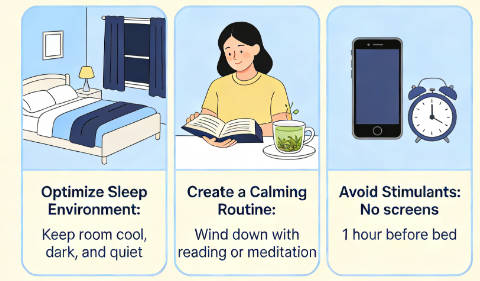
I also created a bedtime routine to help me wind down before bed. My bedtime routine includes:
- Turning off all screens at least an hour before bed
- Taking a warm bath or shower
- Reading a book
- Practicing relaxation techniques, like deep breathing or meditation
This routine helps signal to my body that it's time to sleep.
3. Create a Sleep-Friendly Environment
I made changes to my bedroom to make it more sleep-friendly:
- Invested in a comfortable mattress and pillows
- Used blackout curtains to keep the room dark
- Used a white noise machine to block out noise
- Kept the room cool—between 60-67 degrees Fahrenheit
These changes helped create a environment that's conducive to sleep.
4. Limit Caffeine and Alcohol
I limited my caffeine intake, especially in the afternoon and evening. I also limited my alcohol intake, as alcohol can disrupt sleep.
5. Exercise Regularly
I started exercising regularly, but I made sure to finish my workout at least 3 hours before bed. Exercise can help improve sleep quality, but exercising too close to bedtime can make it harder to fall asleep.
6. Manage Stress
I learned to manage stress through activities like yoga, meditation, and deep breathing. Stress can make it harder to fall asleep and stay asleep.
7. Avoid Naps
I avoided napping during the day, as naps can make it harder to fall asleep at night.
8. See a Doctor
I saw a doctor about my sleep apnea, and I was prescribed a continuous positive airway pressure (CPAP) machine. The CPAP machine helps keep my airway open while I sleep, which has improved my sleep quality significantly.
My Results
By incorporating these strategies into my daily routine, I've been able to improve my sleep quality significantly. I now fall asleep faster, I stay asleep throughout the night, and I wake up in the morning feeling refreshed and energized.
I've also noticed that my weight loss has improved. I have fewer cravings, and I'm able to make healthier food choices.
But most importantly, I feel better overall. I have more energy, I'm more productive, and I'm happier.
Tips for Getting Started
If you're struggling with sleep, here are some tips to help you get started:
1. Start Small
Don't try to make all these changes at once. Start with one strategy, and once it becomes a habit, add another one.
2. Be Consistent
Consistency is key when it comes to improving sleep quality. Try to stick to your sleep schedule and bedtime routine every day, even on weekends.
3. Be Patient
Improving sleep quality takes time. It may take a few weeks or even a few months to see results.
4. See a Doctor
If you're struggling with sleep, don't hesitate to see a doctor. They can help diagnose any underlying conditions that may be affecting your sleep.
Final Thoughts
Improving sleep quality has been one of the best things I've ever done for myself. It's helped me lose weight, improve my overall health, and feel better about myself.
Remember, sleep is essential for overall health and well-being. It's not a luxury—it's a necessity.
If you're struggling with sleep, don't give up. There are things you can do to improve your sleep quality, and the benefits are well worth the effort.
You've got this!